Bat Tunnel Returns
One last twist in the bat saga

Since the HS2 bat tunnel is back in the news (turns out it may actually kill the bats), time for one more story. Which came first – HS2 or the bats?🚄🦇🧵
HS2 affects a particularly sensitive bat – Bechstein’s bat. The infamous £100m bat tunnel was built to save them from being hit by passing trains. In 2005, we only knew of six colonies in the UK. None of which were near HS2.
But in 2007, the bat conservation trust went out to find more of them. And they brought something new – the Autobat
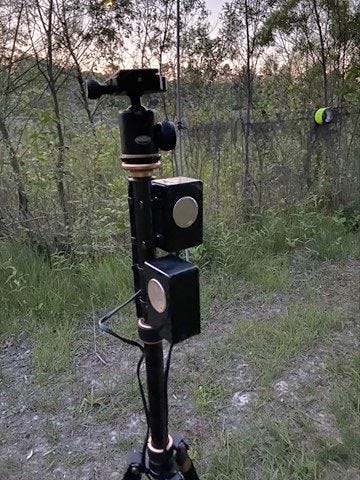
The Autobat is a special acoustic lure. You programme it to make a sound that will attract bats of the opposite sex. Trap the bats; check what type of bat they are; and let them go.
The Autobat is good. So good that it caused an explosion in the number of Bechstein’s bats in the country. We’ve now found more than 70 colonies. There will be many more. Great news! cdn.bats.org.uk/uploads/pdf/...
But not for HS2. HS2 was announced in 2009. No one had seen a Bechstein’s bat within 50 miles of the expected route.
The North Bucks Bat Group (on the likely route) agreed to be one of the bat survey areas in 2010.
And by 2011 they’d found 8 Bechstein’s bats.
And now HS2 needed to build a £100m bat tunnel.

Overall, this study was great news for Bechstein’s bat. From six colonies, we now think their spread looks more like the map below. We thought there were about 1,500 of them. It’s more like 25,000 And we now rate them as ‘Least Threatened’ in the extinction hierarchy for the UK
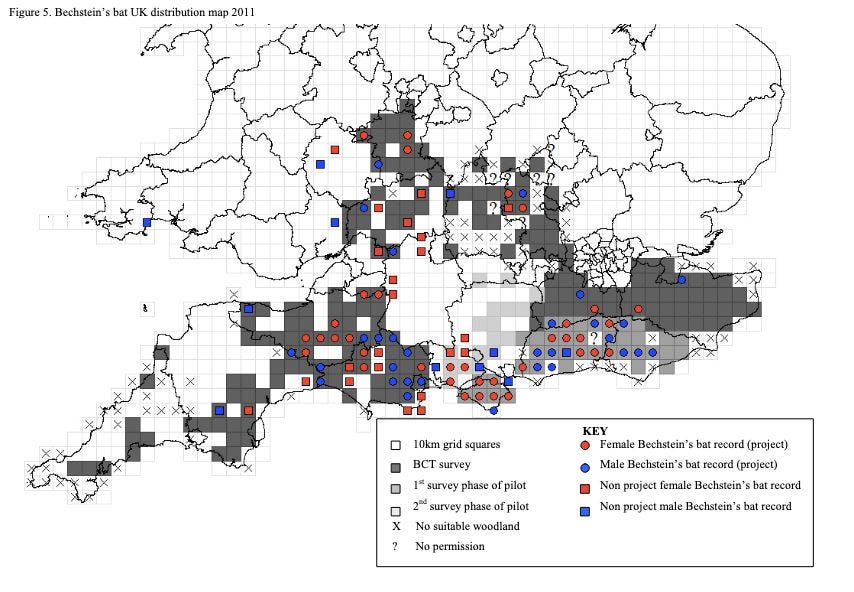
But in planning terms, it was a bit of a disaster. Because now everywhere in one of these squares marked in red or blue had to worry about bat conservation
Those HS2 bats probably existed pre-2010. The bigger story is how that bat survey silently reshaped local planning
You see - the problem with bats is that they fly.
Because they fly, they roost, forage and travel over a large area. Environmental control has to protect all that.
Other species affect a field. One finding of a Bechstein’s bat affects a 100km2 ‘hectad’.
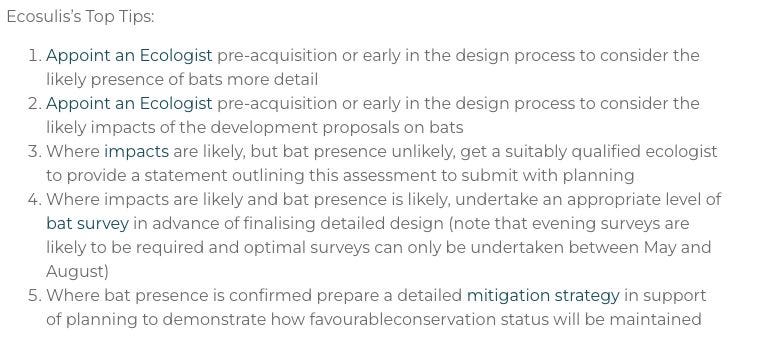
And bat control does not mess around. A lot of ‘weird’ planning stories revolve around bats Here is one ecological consultancy’s tips to deal with the challenge Note the bit about how you need to assess bat impacts to get planning permission, and can only do this May to August
Not that this always helps. There is at least one case where planning permission was refused not because bats lived at the building in question, but because they might want to live there in the future.
You can’t even look for bats without a bat licence
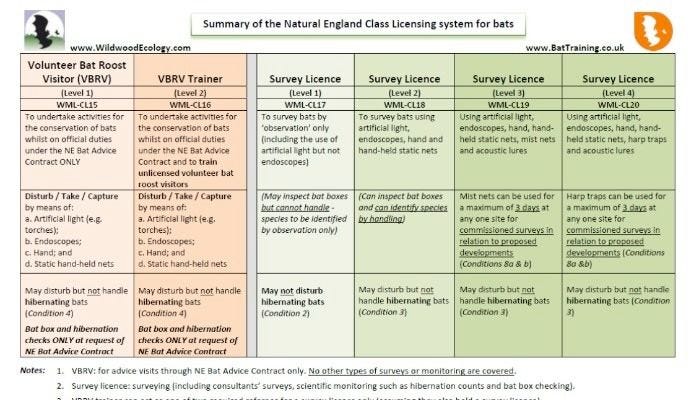
So that 2007-2011 study was arguably the quietest landgrab in planning history, suddenly putting bat rules over a large fraction of England. Maybe as much as 11000km2 Perhaps not the intention of the government body (The Joint Nature Conservation Committee) that funded it.
Though perhaps this situation isn’t uncongenial to those it affects inside of the civil service. Let’s flip over to Natural England, who run the nation’s environmental controls. Natural England isn’t about to let up on the bat rules any time soon.
Environmental authorities can rate a species as having ‘favourable conservation status’ when they’re thriving.
Like, say, when their recorded population rises by more than 1000%, you find 10x as many breeding colonies and double their national range.
But in their recent assessment, Natural England said you shouldn’t pay attention to that. Because all of that has come about as a result of recording more Bechstein’s bats, rather than showing the colonies were themselves thriving. publications.naturalengland.org.uk/file/5779018...
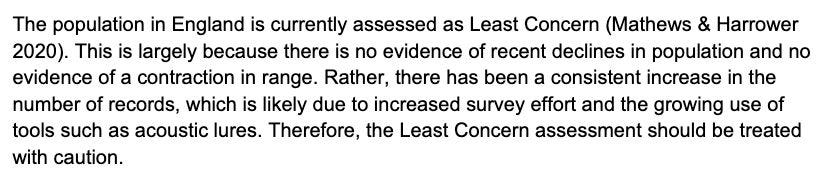
So when we weren’t looking for them, we thought these bats were rare and under threat.
Now we’ve looked, we’ve found lots.
But because that’s about data collection, it shouldn’t change their status
Because nothing has changed about the bats.
It’s the logic of an episode of Yes Minister. Because the idea that the bureaucratic starting point was itself flawed clearly isn’t on the agenda
But it’s not really a joke. When you look at the whole story, it leaves a bad taste in the mouth.
Because this isn’t democratic. No minister signed it off.
Instead, some minor quangocrats commissioned some data collection, and the rest was just a domino run
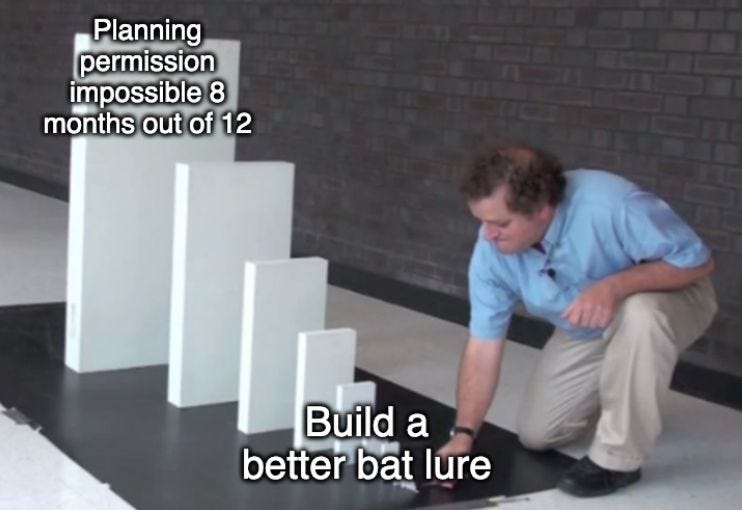
Someone should have needed to ask. Somewhere in that process, the word ‘stop’ should have been possible.
Or there should be some way for the law to say ‘too much’.
It feels like a system on autopilot, and an autopilot going badly wrong.
This is why I’m weirdly cheered by the £100m bat tunnel of death. Because this debate isn’t on autopilot any more.
Nature is important. But it’s one priority amongst many. And to choose those priorities we have to see, and debate, and reach a consensus that represents all.
Even the 25,000 bats.